


A gear pump is a positive displacement pump that uses meshing gears to efficiently move fluid. It is widely used in industrial applications, including hydraulic systems, chemical processing, and lubrication systems. Gear pumps are divided into external gear pumps and internal gear pumps, each with unique structural design and performance advantages. This article explores the main components of these pumps, their functions, and the overall gear pump market, while also discussing the role of gear pump suppliers in providing high-quality products.
Function of gear pump
Gear pump is mainly responsible for effectively converting the mechanical energy of the prime mover (such as electric motor or diesel engine) into hydraulic energy, providing a continuous and stable power source for the entire system. The gear pump sucks hydraulic oil from the oil tank and pressurizes it into the system through the rotation of meshing gears, ensuring that each actuator (such as hydraulic cylinder, hydraulic motor) can obtain sufficient flow and pressure to complete lifting, pushing, rotating, clamping and other tasks.
Hydraulic gear pump can still maintain high reliability and system stability during long-term continuous operation. By using it in conjunction with control elements such as pressure valves and flow valves, the gear pump can not only meet the flexible adjustment requirements of pressure and flow under different working conditions, but also improve the energy utilization efficiency of the entire hydraulic system. Because of its stable performance and strong adaptability.
External Gear Pump Components
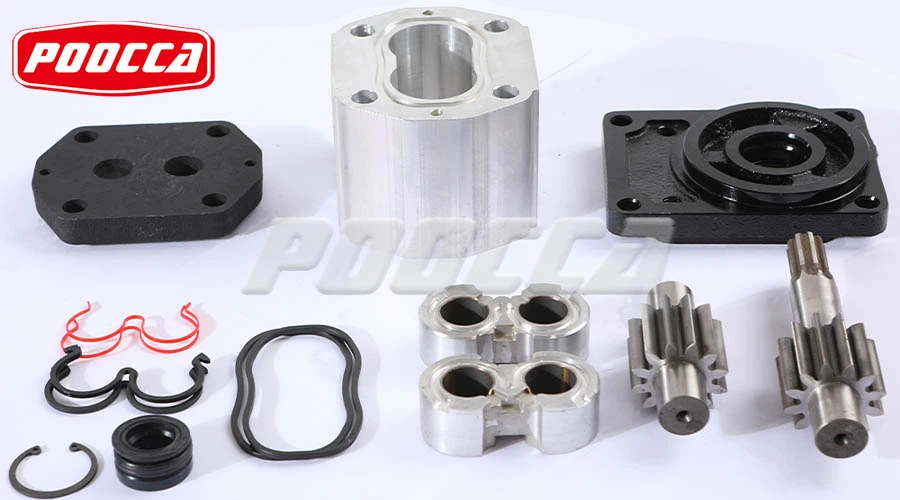
External gear pumps consist of two identical gears that rotate in opposite directions within a sealed housing. The main components include:
1.1 Gears of Hydraulic Gear Pumps
The heart of an external gear pump is the gears. Gears are usually made of hardened steel, cast iron, or high-strength plastic and are responsible for moving fluid through the pump. There are two types of gears in an external gear pump:
Drive gear (power gear) - connected to a motor or other power source.
Driven gear (idler gear) - rotates in response to the movement of the drive gear.
The movement of these gears creates suction at the inlet, sucking in fluid and pushing it toward the discharge port.
1.2 Pump Casing
The pump casing is used to enclose the gears and maintain proper alignment. It is typically made of heavy-duty material such as cast iron or stainless steel to withstand high pressure and abrasive liquids.
1.3 Bearings
The bearings position the rotating shafts of the gears, reducing friction and allowing smooth running. High-quality, anti-friction bearings enable the pump's extended lifespan and efficiency.
1.4 Shaft
The shaft allows torque to be transferred from the motor to the gears. They need to be strong and durable enough to bear constant use.
1.5 Seals and Gaskets
Seals and gaskets help to seal leaks and preserve pressure within the pump. They contribute significantly to maintaining the integrity of the pumping system and to enabling the pump to have a long lifespan.
Internal Gear Pump Components
Unlike external gear pumps, internal gear pumps use a different configuration with a larger outer gear (rotor) and a smaller inner gear (idler). Key components include:
2.1 Rotor (External Gear)
The rotor is a larger gear with internally cut teeth. It is directly connected to the power source and drives the internal idler gear.
2.2 Idler (Internal Gear)
The idler is smaller and rotates inside the rotor. It has fewer teeth than the rotor and is located eccentrically, creating a constantly expanding and contracting chamber for fluid movement.
2.3 Crescent Seal
A crescent-shaped diaphragm separates the suction and discharge sides of the pump. It ensures controlled flow of liquid through the gear pump.
2.4 Pump Casing of Gear Pump
As with external gear pumps, the pump casing in internal gear pumps houses all internal components and provides structural support.
2.5 Bearings and Shafts
The bearings and shafts perform the same function as in external gear pumps, ensuring smooth rotation and minimal friction.
2.6 Seals and Gaskets
Seals prevent leakage and ensure that internal pressure remains stable, allowing for efficient fluid transfer.
Differences between external gear pumps and internal gear pumps
Due to their different structural designs, external gear pumps and internal gear pumps also have certain differences in application functions. External gear pumps consist of a pair of meshing external gears, and the oil suction and oil pressure process is completed by meshing and separation between gears during operation.
Internal gear pumps consist of an inner gear ring and a smaller outer gear, which mesh internally. Compared with external gear pumps, internal gear pumps have higher volumetric efficiency and lower noise levels, run smoothly, and have less leakage.
External gear pumps are economical, practical, and adaptable, while internal gear pumps are mainly efficient, low noise, and long life. You can choose them according to your specific application needs.
Technical Parameters of Hydraulic Gear Pump
Hydraulic gear pump is a key power element in hydraulic system. Common technical parameters of gear pump mainly include the following aspects:
1. Flow Rate
Flow rate refers to the volume of hydraulic oil output by the gear pump per unit time, usually expressed in liters per minute (L/min) or milliliters per revolution (cc/rev). The flow rate determines the action speed of the hydraulic actuator in the system and is an important indicator for measuring the oil supply capacity of the pump.
2. Rated Pressure
Rated pressure refers to the maximum pressure that the gear pump can withstand for a long time under normal continuous working conditions, in bar or MPa. Reasonable selection of rated pressure that meets system requirements can effectively ensure the stable operation and service life of the gear pump.
3. Maximum Pressure
The maximum pressure is the limit pressure value that the gear pump can withstand in a short period of time. Exceeding this pressure is likely to cause damage to the pump body or serious leakage. In actual use, the gear pump should be prevented from being in the maximum pressure working state for a long time.
4. Displacement
Displacement refers to the volume of liquid that the gear pump displaces in one rotation, usually expressed in cc/rev. The size of the displacement is directly related to the output flow of the pump per unit time, and is one of the important bases for selection and design.
5. Speed Range
The speed range includes the minimum and maximum speeds allowed, in revolutions per minute (rpm). The speed selection should meet the design requirements of the pump to avoid reduced efficiency or early wear of the pump due to overspeed or low speed operation.
6. Efficiency
Gear pump efficiency usually includes volumetric efficiency and mechanical efficiency, which reflects the loss of the gear pump during the energy conversion process. The higher the efficiency, the better the performance of the gear pump and the lower the system energy consumption.
7. Port Size
The port size refers to the connection size of the gear pump suction port and pressure port, usually expressed in inches (inch) or millimeters (mm). Reasonable matching of the port size helps to ensure stable system flow and reduce energy loss.
8. Self-priming Height
The self-priming height refers to the maximum vertical distance that the gear pump can suck up liquid without adding oil, in meters (m). Good self-priming performance helps simplify the system and facilitate startup.
9. Weight
Weight refers to the mass of the gear pump body, in kilograms (kg). The weight parameter has a certain reference value in the equipment installation design, movement or maintenance process.
10. Mounting Type
The mounting method includes flange mounting, foot mounting, etc., which determines the connection method of the gear pump with other system components. Reasonable selection of the mounting method according to the equipment layout and use environment can improve the overall compactness and maintenance convenience of the system.
Gear Pump Suppliers and Market Trends
The global gear pump market is growing due to increasing demand from industries such as construction, manufacturing, and oil and gas. Reliable gear pump suppliers are also gradually improving in ensuring high-quality products to their customers.
1.Choosing a reliable gear pump supplier
When choosing a gear pump supplier, companies should consider:
Material quality - the pump should be made of strong materials such as cast iron, stainless steel or hardened steel.
Manufacturing standards - vendors are required to follow international quality certifications such as ISO 9001.
Customization options - some applications require customized gear pumps, so suppliers with OEM/ODM capabilities are beneficial.
Supply chain efficiency - suppliers should provide fast delivery and stable inventory.
Our hydraulic supplier will produce and send you the materials you need for the working environment. If there is no requirement, we will produce according to the conventional materials. Poocca accepts customization, please contact us.
2.Gear Pump Market Overview
The gear pump market is expected to grow steadily as it is widely used in the following industries:
Hydraulic systems - used in construction and industrial machinery.
Automotive industry - lubrication and fuel delivery systems.
Oil and gas industry - handling crude oil and refined petroleum products.
Chemical processing - pumping viscous fluids and chemicals.
3.Key players in the gear pump market
Some of the leading manufacturers supplier and suppliers in the gear pump market include:
Parker Hannifin
Eaton Corporation
Bosch Rexroth
Danfoss
Casapa
Poocca Hydraulic Manufacturer
Lexmua Hydraulic Manufacturer

Installation, commissioning, fault finding and maintenance of gear pump
Daily maintenance and correct installation can ensure the gear pump operates normally and extends its service life. During installation, the gear pump should be concentrically mounted on the driving shaft to avoid premature bearing wear caused by eccentricity. The pump body shall be firmly fixed, and the oil suction pipeline should be short and straight to avoid air suction. The pump must also be topped off with oil prior to the initial start to ensure that the pump is properly lubricated.
In the setting and commissioning stage, the working pressure and flow shall be controlled according to the system requirements to avoid the operating parameter range exceeding the rated value of the gear pump. In the beginning, a temporary jog is used to inspect if the steering is correct, and then proceed to continuous operation after ensuring that there is no abnormal sound or leakage.
In maintenance, usual problems including irregular vibration of pump body, abnormally high noise, low pressure or irregular system pressure. On such occasions, focus should be laid on establishing the oil cleanliness, pipeline sealing, loose or not loose flanges at outlet and inlet, and internal gear pump wear. Tear down and refurbish or replace wear items where necessary.
Day-to-day maintenance recommends periodic replacement of hydraulic oil and cleaning of filters to keep the system clean and not allow impurities to find entry into the pump body and cause internal damage. As this is being done, the pump's seals, connectors, and support structures need to be inspected regularly, and loose or deteriorating problems ought to be taken care of on a timely basis to avoid the gear pump from becoming less efficient and less safe for use.
Future trends in the gear pump market
With the advancement of hydraulic and industrial technologies, there are many scenarios where mechanical applications can be used. The gear pump market is witnessing several emerging trends:
1.Increasing demand for energy-efficient hydraulic gear pumps
Modern industry prioritizes energy efficiency, and gear pump supplier are developing new models with higher efficiency and lower power consumption.
2.Adoption of smart hydraulic pumping technology
IoT-based sensors are integrated in gear pumps to monitor flow, pressure, and temperature in real time, reduce downtime, and improve maintenance efficiency.
3.Expansion in emerging markets
The rise of manufacturing and construction industries in China, India, and Southeast Asia has driven the demand for gear pumps. More and more gear pump suppliers are expanding their business in these regions.
4.Focus on Eco and Sustainable Materials
Supplier are now turning to biodegradable hydraulic fluids and pump components made from recyclable materials to reduce environmental impact.
The primary components of a gear pump vary in nature – external gear pumps consist of two meshing gears, and internal gear pumps consist of a rotor and an idler. Both types accomplish efficient, consistent fluid transfer in hydraulic systems.
With the growing trend of the gear pump market, the right supplier of gear pump is required for high performance and durability with increasing efficiency. Global leaders are redesigning energy-saving concepts, intelligent technology, and environmentally friendly material to meet industrial needs.
Poocca Hydraulics supplier offer various types of gear pumps, get in touch to purchase.

Gear Pump FAQ
Q:What should I pay attention to while starting the gear pump?
A:Before starting, you must ensure that the gear pump is full of hydraulic oil, verify that the oil suction port is unobstructed, and the steering is correct in order to avoid damage through dry grinding or cavitation.
Q:Is the gear pump able to run at full pressure for a long time?
A:No. The gear pump should be able to run for a long time at rated pressure. It will result in increased gear wear, leakage, and the shortening of the equipment life if it is run for a long time under full pressure.
Q:What should I do if the flow of the gear pump is insufficient?
A:First make sure that the oil is sufficient, that the suction pipe of oil is not leaking, and the filter is free from blockages. If yet it cannot be recovered, you may have to make sure that the gears, bearings and other parts are badly worn.
Q:Can internal and external gear pumps be interchangeable?
A:It is generally not recommended to exchange directly. There are performance characteristics differences (e.g., efficiency, noise) and installation size differences between the two. The proper model must be selected based on the system design requirements.
Q:What is the maintenance cycle length of the gear pump?
A:It is recommended to check the overall condition every 500 hours and carry out a thorough maintenance every 2000 hours that includes the hydraulic oil change, filter cleaning, seal inspection and replacement of wear components.


