



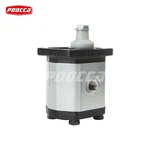
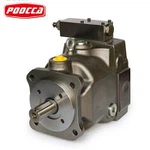


Vickers Vane Pump
Vickers Vane Pump
Psrsmeter
A Vickers vane pump, also known as a vane pump, is a type of hydraulic pump used to generate fluid flow in hydraulic systems.
The basic principle of a Vickers vane pump involves a rotor with vanes (usually made of materials like graphite, plastic, or metal) that rotate inside a cam ring. As the rotor spins, the vanes are pushed outward by centrifugal force and slide against the inner surface of the cam ring. This creates chambers of varying volume within the pump.
When fluid is introduced into the pump through an inlet port, the changing chamber volume causes suction, drawing the fluid into the expanding chamber, and then the vanes push the fluid out through an outlet port as the chamber volume decreases. This action generates a continuous flow of hydraulic fluid, which is then used to operate various hydraulic machinery and components.
20VQ Display Diagram:

2520VQ Display Diagram:

V10 Display Diagram:

3520V Display Diagram:

Feature
Vane Design: Vickers Vane Pumps use a rotor with vanes that slide in and out of slots within the rotor. As the rotor turns, the vanes extend and retract, creating chambers that draw in and discharge hydraulic fluid.
Efficiency: These pumps are known for their high volumetric efficiency, which means they can deliver a consistent flow of hydraulic fluid with minimal internal leakage.
Low Noise Levels: Vane pumps tend to operate quietly, making them suitable for applications where noise levels are a concern.
Compact Design: Vickers Vane Pumps are relatively compact and lightweight, making them easy to install and integrate into hydraulic systems with limited space.
Versatility: They are versatile and can handle a wide range of hydraulic fluids and viscosities, making them suitable for various applications.
Reliability: Vane pumps are known for their durability and long service life when properly maintained.
More Models
Single Vane Pump:V10(F),V20(F),20V(Q),25V(Q),35V(Q)45V(Q)
Double Vane Pump:2520V(Q),2525V(Q),3520V(Q),3525V(Q),4520V(Q),4525V(Q),4535V(Q)
For more detailed content, please click on "Vickers Vane Pump"

Vickers Vane Pumps find application in a variety of industries and hydraulic systems, including:
Industrial Machinery: They are used in industrial equipment such as injection molding machines, machine tools, and metal-forming machines.
Mobile Machinery: Vane pumps are commonly used in mobile hydraulic applications like agricultural machinery, construction equipment, and utility vehicles.
Material Handling: Vane pumps are employed in forklifts, conveyors, and other material handling equipment to power hydraulic lifts and movements.
Aerospace: In some aircraft hydraulic systems, vane pumps are used for specific applications due to their reliability and efficiency.
Automotive: Vane pumps can be found in power steering systems and automatic transmissions in some vehicles.
Marine: Vickers Vane Pumps are used in various marine applications, including steering systems and hydraulic winches on boats and ships.
Installation and Maintenance
Repairing and installing a Vickers Vane Pump, or any hydraulic pump for that matter, requires a good understanding of hydraulic systems and proper procedures.
1.Installation:
**Prepare the Work Area: Ensure the work area is clean and well-organized. Make sure you have all the necessary tools and safety equipment.
**Choose the Right Location: Select an appropriate location for the pump within the hydraulic system. Ensure it is properly aligned with other components and secured to a stable foundation.
**Check Alignment: Accurate alignment is crucial. Align the pump shaft with the shaft of the prime mover (usually an electric motor or engine). Use coupling or belt drive systems as needed.
**Check Fluid Compatibility: Ensure the hydraulic fluid you plan to use is compatible with the pump's materials and seals. Consult the pump's documentation for specific recommendations.
**Connect Hydraulic Lines: Connect the hydraulic lines to the pump's inlet and outlet ports. Make sure the connections are tight and sealed properly to prevent leaks.
**Fill with Hydraulic Fluid: Fill the pump with the appropriate hydraulic fluid as per the manufacturer's recommendations. Bleed air from the system to avoid cavitation.
**Start the Prime Mover: Start the prime mover (motor or engine) to initiate the pump operation. Check for any unusual noises, vibrations, or leaks.
**Monitor Performance: Monitor the pump's performance, including pressure, flow rate, and temperature, to ensure it operates within specified parameters.
2.Repair:
1.Please note that repairing a hydraulic pump, especially if it involves disassembly and component replacement, can be a complex task. It's often recommended to have a trained technician or professional perform repairs. However, if you have the necessary expertise, here are some general steps:
2.Safety First: Ensure the hydraulic system is depressurized and that all safety precautions are followed, including wearing appropriate personal protective equipment (PPE).
**Identify the Issue: Diagnose the problem with the pump, which may involve abnormal noises, leaks, or reduced performance. Refer to the pump's maintenance manual for troubleshooting guidance.
**Disconnect Power: Turn off the power to the pump to ensure it's not running during the repair process.
**Disassembly: Carefully disassemble the pump, following the manufacturer's guidelines. Take note of the order and orientation of components during disassembly.
**Inspect Components: Inspect all internal components, including vanes, rotor, housing, and seals. Replace any damaged or worn parts.
**Clean and Reassemble: Thoroughly clean all components and reassemble the pump in the correct order. Use the manufacturer's recommended lubricants and sealants.
**Check Tolerances: Ensure that clearances and tolerances between components are within the manufacturer's specifications.
**Testing and Calibration: After reassembly, test the pump's performance, including pressure, flow rate, and temperature. Make necessary adjustments to calibrate it properly.
**Seal Replacement: If the pump had leaks, replace damaged seals or gaskets. Ensure proper sealing to prevent future leaks.
**Final Inspection: Perform a final inspection, checking for any unusual noises, vibrations, or leaks. Confirm that the pump operates within specified parameters.
Hot Tags: vickers vane pump, suppliers, manufacturers, factory, customized, wholesale, price, cheap, for sale
You Might Also Like


Send Inquiry